Rowena
Character Report: ROWENA
I. Core Information
- Character Name: Rowena (Ancient identity, past life of Ali Westfield)
- Age: Appears to be in her early to mid-20s during the primary events of her life.
- Gender Identity & Pronouns: Female (She/Her)
- Physical Description:
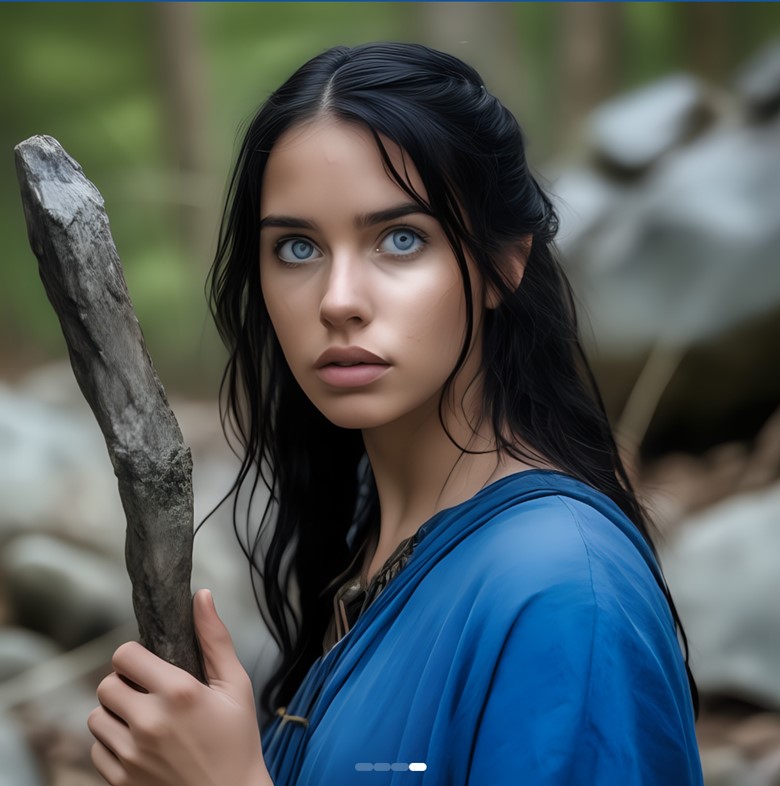
- Described as having “intense blue eyes,” a striking feature shared with Ali.
- Likely possesses an ethereal beauty, given her “Nephilim” heritage, but also capable of fierce determination and resilience.
- Her physical state varies from a “beggar queen” scrounging for food to a warrior facing a dragon.
- Role in the Story: The central figure of the “Legend of Dragonfield,” whose ancient choices and lineage directly impact the present-day conflict. She is the progenitor of the Wyrmfeld line and the fated connection to both Myrddin and Wyrtgeorn.
II. Background & History
- Origin: “From the upper realm,” described as “Nephilim” (half-angel/half-human or another race). This grants her a unique, almost divine, connection to the world and its magical forces.
- Life Circumstances: Experienced extreme hardship, including being a “beggar queen” and “scrounging for food,” suggesting a life of struggle and survival despite her extraordinary heritage.
- Founder: She is credited with building the Wyrmfeld castle, establishing a lineage tied to the land and its legends.
- Motherhood: Endured “the agony of pushing a child into the world alone,” indicating a period of isolation and immense personal strength.
III. Inner Life & Psychology
- Core Desire: Survival, protection of her child, and perhaps understanding or fulfilling her unique destiny. She seeks connection and perhaps a place in the world despite her “fallen” nature.
- Motivation: Driven by instinct for survival, maternal love, and a deep-seated resilience forged through hardship. Her actions are often reactive to the immense forces (Myrddin, Wyrtgeorn, the Dragon) swirling around her.
- Personality Traits:
- Resilient: Endures extreme hardship and trauma.
- Fierce/Defiant: Capable of attacking a dragon and striking Wyrtgeorn upon their first meeting.
- Vulnerable: Experiences fear, agony, and the isolation of her circumstances.
- Empathetic/Loving: Capable of cradling Wyrtgeorn and forming deep bonds.
- Mysterious: Her true nature and the full extent of her powers (if any) are hinted at but not fully revealed.
- Values & Beliefs: Survival, protection of family, perhaps a deep connection to the natural world (implied by the Great Stag).
- Strengths:
- Nephilim Heritage: Grants her a unique connection to the dragon, allowing her to survive its attack.
- Resilience: Both physical and emotional.
- Courage: Faces direwolves, Myrddin, Wyrtgeorn, and a dragon.
- Maternal Instinct: Drives her to protect her child alone.
- Weaknesses:
- Vulnerability to Circumstance: Despite her heritage, she is subject to human suffering (poverty, isolation, childbirth).
- Targeted: Her unique nature makes her a focal point for powerful entities like Myrddin.
- Secrets: The full extent of her Nephilim powers, her true origins, and the details of her connection to Avalon (if she “turned away” from it) remain largely unrevealed.
- Temperament: A mix of fierce survival instinct and a capacity for deep emotional connection and vulnerability.
IV. Relationships
- Myrddin Emrys: A powerful, ancient figure who believed Rowena was “meant for him.” Their relationship is one of destined conflict, with Myrddin attempting to claim her.
- Wyrtgeorn: Her fated “sword & shield.” Their relationship is one of profound, undying love and loyalty. He was led to her to protect her, and she reciprocated his devotion (cradling him, being “pressed against her heart”). Their initial meeting involved her striking him, suggesting a fierce, perhaps wary, beginning that blossomed into deep affection.
- Her Child: The product of her solitary struggle, representing her enduring legacy and deepest maternal bond.
- The Dragon: A force of nature that inexplicably spares her, hinting at her unique connection to it due to her Nephilim heritage.
V. Arc & Transformation
- Initial State: A struggling “beggar queen,” perhaps unaware of the full extent of her heritage or destiny.
- Pivotal Moments:
- Meeting Wyrtgeorn: The beginning of her fated protector relationship.
- Confronting Myrddin: The direct clash with the ancient sorcerer.
- Facing the Dragon: The moment her unique nature is revealed through its non-aggression.
- Childbirth Alone: A moment of immense personal struggle and resilience.
- Transformation: Rowena transforms from a survivor into a foundational figure, establishing a lineage and leaving behind a legend that will guide her descendants. She embodies the resilience of the Nephilim and the power of love.
VI. Practical & Miscellaneous
- Voice & Speech Patterns: Should convey a sense of ancient wisdom and resilience, perhaps with a touch of world-weariness from her struggles, but also capable of fierce defiance and tenderness.
- Physicality: Capable of both vulnerability and surprising strength. Her movements should reflect her life of hardship and her innate connection to the natural world.
- Sensory Details: Imagine the cold of the streets, the hunger, the primal fear of direwolves and dragons, the warmth of Wyrtgeorn’s embrace.
- “Animal” Analogy: A she-wolf – cunning, resilient, fiercely protective of her young, capable of both surviving in harsh environments and forming deep, loyal bonds.
CHARACTER PSYCHOLOGICAL PROFILE
Rowena is a Nephilim (also called Zesknelian)—a divine being with otherworldly beauty and supernatural abilities who has descended to the mortal realm. She embodies the archetype of the fallen angel: ethereal, mysterious, and caught between two worlds. Her story arc traces a devastating trajectory from celestial grace through profound love to catastrophic loss, making her one of the most psychologically complex characters in the narrative.
BACKGROUND AND ORIGINS
Divine Heritage
Rowena belongs to the Zesknelian race, beings described as having ‘the appearance of a human, even a soul, but angelic powers that differentiate them from ordinary humans.’ She exists in an ancient cosmic conflict between the Zesknelians (associated with ‘the gods’) and the Kvesknelians (demons banished to the netherworld). This heritage informs her entire psychological makeup—she carries the weight of divine knowledge while experiencing mortal emotions with devastating intensity.
First Appearance
Rowena enters the story as a hunted, wounded woman fleeing from direwolves in a primordial forest. She is barefoot, wearing only a torn blue tunic, displaying both vulnerability and remarkable resilience. Her initial silence suggests trauma or perhaps a deliberate withholding—she does not speak until Wyrtgeorn bandages her wounds and their eyes meet. This moment of connection unlocks her voice, suggesting that trust and genuine care are prerequisites for her emotional availability.
CORE PERSONALITY TRAITS
- Defiant Loyalty: When King William II demands she go with him, offering Wyrtgeorn vast lands in exchange, Rowena’s response is immediate and unwavering: ‘I see only one man here—I choose him.’ This defiance in the face of royal power reveals her fierce autonomy and loyalty.
- Protective Instinct: Her most consistent trait is her desperate need to protect Wyrtgeorn, even from himself. She repeatedly pleads with him not to face the dragon, knowing the battle is futile. This protectiveness stems from love but also from her divine knowledge of the true nature of the threat.
- Mystical Silence: Rowena often communicates through presence rather than words. Her initial silence, her captivating ice-blue eyes, and her ability to convey meaning through looks and gestures suggest a being who exists partially beyond language.
- Fearlessness: Whether facing King William II’s threats, Myrddin’s magical assault, or the dragon itself, Rowena displays remarkable courage. She bites Myrddin’s arm during combat, knocks him off balance to save Wyrtgeorn, and later attempts to attack the dragon single-handedly.
- Dignity Under Duress: Even when disfigured, burned, and rejected by villagers who stone her, Rowena maintains a core of identity. Her transformation into rage rather than complete despair shows her refusal to be diminished, even in her lowest moment.
EMOTIONAL RANGE AND EXPRESSION
Love and Intimacy
Rowena’s love for Wyrtgeorn is all-consuming and transformative. When she ‘sings like a running brook whispering its melody to the night,’ she expresses emotion through ethereal, non-verbal means. The screenplay notes that ‘a tear escapes him’ during their intimacy—she has the power to crack open even a hardened warrior’s emotional armor. Her love is characterized by complete surrender and profound connection.
Desperation and Pleading
In her final confrontation with Wyrtgeorn before he faces the dragon, Rowena displays raw desperation. She weeps, grabs his leg, pleads repeatedly (‘No! You must not!’), and asks ‘Do my tears count for nothing?’ This vulnerability contrasts sharply with her earlier defiance, showing that love has given her new fears—the fear of loss.
Grief and Trauma
After the dragon attack, Rowena’s grief manifests in stages. First comes the physical trauma and pain. Then rejection by the villagers triggers deep shame and self-loathing. This evolves into suicidal ideation (she fashions a noose). Finally, when denied even death, her grief transforms into rage. She attacks the dragon futilely, driven by fury rather than hope.
Frozen Despair
The prologue’s final image is devastating: Rowena standing waist-deep in the lake, ‘motionless and mute,’ sinking slowly into the silt. This represents psychological death—a complete shutdown of will, hope, and agency. She exists but does not live, trapped in a liminal space between mortality and her divine nature.
RELATIONSHIPS
Wyrtgeorn (Beloved)
This relationship defines Rowena’s mortal experience. Wyrtgeorn saves her from the direwolves, tends her wounds, and offers her safety without demand. His gentleness and respect unlock something in her—the capacity for mortal love. She becomes pregnant with his child, binding her to the mortal world in the most profound way. Her love for him is so complete that his death becomes her own psychological annihilation.
Myrddin Emrys (Adversary)
Myrddin represents Rowena’s cosmic past and the conflicts she cannot escape. He calls her ‘Zesknelian’ and accuses her presence as ‘provocation,’ linking her to ancient wars between divine factions. Rowena faces him with knowledge and defiance, addressing him as ‘Kvesknelian’ and refusing his claim that she bears responsibility for ancient grievances. Their confrontation reveals that Rowena, despite her youth (he calls her ‘a child newly ascendant’), possesses cosmic knowledge and refuses to be intimidated.
The Villagers (Rejection)
After the dragon attack, the villagers who once admired Rowena’s beauty now see only her grotesque burns. A little girl who once gave her flowers throws stones. A boy beats her with an iron poker. They call her ‘Unclean’ and ‘Witch.’ This rejection is particularly devastating because it represents the loss of her place in human society—she is neither divine enough to transcend suffering nor human enough to be accepted in her damaged state.
TRAUMA AND TRANSFORMATION
The Dragon Attack: Physical Destruction
Rowena survives the dragon fire only by the slenderest chance, sheltering under an oak table. The trauma is comprehensively described: her nose is melted away, her hair singed to nothing, her skin blistered and blackened. She must peel away charred clothing that takes strips of flesh with it. This physical destruction mirrors her internal devastation—beauty was part of her divine nature, and its loss represents a fundamental violation of her identity.
Psychological Collapse: The Stages
Survival Mode: Initially, Rowena moves on instinct, searching the ruins, scavenging food, seeking water. Her body continues functioning even as her mind processes the horror.
Self-Recognition Shock: When she sees her reflection in the water trough, she recoils. This moment represents the shattering of self-image and identity.
Social Rejection: The villagers’ attack compounds her trauma. She is not just physically damaged but socially annihilated, reinforcing her sense of unworthiness.
Suicidal Ideation: Rowena fashions a noose and seeks to end her suffering. This represents her complete loss of hope for recovery or meaning.
Rage and Futility: Seeing the dragon triggers fury. She attacks it repeatedly, futilely. This rage is her only remaining life force—anger at the injustice of her suffering.
Catatonic Despair: Finally, she stands frozen in the lake, ‘the only living thing within a day’s march,’ unable to die but unable to live. This is psychological death—complete dissociation from hope, purpose, and self.
MOTIVATIONS AND INTERNAL CONFLICT
The Divine vs. Mortal Conflict
Rowena’s central conflict is her existence between worlds. As a Nephilim, she possesses powers and knowledge that set her apart, yet she has chosen (or been forced into) mortal experience. Her love for Wyrtgeorn represents her commitment to mortality—she bears his child, experiences human joy and sorrow. But her divine nature makes her a target (Myrddin seeks to sacrifice her to open the Stanenges) and gives her knowledge that makes mortal losses even more devastating.
Autonomy vs. Destiny
Rowena insists on her own choices. She chooses Wyrtgeorn over King William II. She refuses Myrddin’s framing of her as cosmically guilty. Yet she cannot escape the consequences of her divine heritage—the dragon comes because Myrddin summons it to punish Wyrtgeorn for harboring her. Her autonomy is real but constrained by forces beyond mortal comprehension.
PHYSICAL AND SUPERNATURAL CHARACTERISTICS
- Ice-Blue Eyes: Described as ‘captivating,’ creating a ‘prison of blue,’ these eyes are Rowena’s most distinctive feature and appear to be an inherited trait (Wyrtgeorn’s descendants also have ice-blue eyes). They suggest both inhuman beauty and piercing insight.
- Ethereal Beauty: Her appearance is so striking that King William II cannot look away, villagers are awed (‘yellow-toothed smiles widen, awed by the enchantress’), and the Benedictine monk describes her as ‘beyond’ Wyrtgeorn.
- Rapid Healing: When Emma checks Rowena’s direwolf wounds, ‘the gash is now a scab’ after just hours, causing Emma to ‘bless herself’ in shock. This supernatural healing ability marks her as non-human.
- Non-Verbal Communication: Rowena communicates through singing ‘like a running brook,’ suggesting her voice has otherworldly qualities. Her presence alone conveys meaning.
- Physical Resilience: She survives extreme trauma—direwolf attacks, magical assault, and dragon fire. Even in her burned state, she maintains enough strength to walk for hours, fashion weapons, and attack the dragon.
ACTING NOTES
Physicality
- Rowena moves with both grace and wariness, like a wild creature that has learned some trust but never fully relaxes
- Her posture should suggest otherworldliness—slightly too still, movements economical and precise
- Post-trauma, her physicality becomes heavy, pained, and mechanical—she moves because she must, not because she wills it
Vocal Quality
- Her voice should have an ethereal, slightly archaic quality—she speaks few words but each carries weight
- Moments of song or non-verbal sound (her ‘brook-like’ singing) should feel genuinely otherworldly
- Her desperate pleas to Wyrtgeorn should break the usual restraint—raw, human emotion overwhelming divine composure
Emotional Journey
- Begin with guarded mystery—she’s been hunted and wounded, trust comes slowly
- Allow genuine softness and joy to emerge in her scenes with Wyrtgeorn—this is her choosing mortality
- Her defiance of King William II and Myrddin should carry cosmic authority, not just mortal stubbornness
- The transformation after the dragon attack is total—from divine beauty to damaged mortal. The actress must find dignity in disfigurement, rage in powerlessness
Key Moments to Emphasize
- First Word: ‘Rowena..’ Her name is a gift, given only after Wyrtgeorn has shown care without demanding anything
- Choosing Wyrtgeorn: ‘I see only one man here—I choose him.’ This should carry absolute finality and quiet power
- Final Plea: ‘Do my tears count for nothing?’ This is her most vulnerable moment, exposing how deeply she needs him
- Seeing Her Reflection: The moment she recoils from her burned face should be visceral—identity shattering in an instant
- Frozen in the Lake: The final image requires stillness that suggests complete internal shutdown while remaining physically present
PSYCHOLOGICAL SUMMARY
Rowena is a being of extremes who experiences the full spectrum of existence—from divine grace to mortal love to absolute devastation. Her psychology is defined by three core truths: First, her otherness (as a Nephilim) makes genuine connection both precious and dangerous. Second, her capacity for love is matched only by her capacity for suffering—she loves Wyrtgeorn with divine intensity, making his loss cosmically unbearable. Third, her transformation from ethereal beauty to burned survivor represents not just physical change but ontological crisis—she loses the external markers of her divine nature while retaining the internal consciousness that cannot die.
The actress playing Rowena must embody contradiction: power and vulnerability, eternity and ephemerality, divine knowledge and mortal heartbreak. She must make audiences believe that a being who could heal from direwolf wounds in hours cannot heal from the wound of losing love. Rowena’s tragedy is that her immortal consciousness survives her mortal happiness, leaving her trapped in awareness without hope—a living death more terrible than any physical destruction.
***
The Nephilim are the offspring between angels and another race other than demons, most often humans. Most of the Nephilim were born prior to the Great Flood but some were sired after it.
The characteristic feature of the Nephilim is that they have blue eyes.
 Wyrmfeld Chronicles